The Big Game Still Wins. Even in 2026.
Every year, the same question returns. Louder than the last.
Is the Big Game still worth it?
In a media landscape defined by fragmented attention, fading broadcast relevance, and the dominance of platforms like YouTube, Netflix, Apple, and Amazon, the skepticism is understandable. Entertainment is personalized. On demand. Infinite.
And yet, the Big Game remains.
It didn’t just evolve beyond broadcast television. It went full Super Saiyan. If broadcast was Victor Frankenstein, the Big Game is the monster it created and can no longer contain. A cultural event that has eaten the channel that once defined it.
If relevance were truly eroding, the market would show it. It doesn’t.
Every available advertising slot for the 2026 game sold out well in advance. A single 30-second spot commanded roughly eight million dollars. Not projected. Paid in full.
In a media economy built on the fleeting whims and seemingly chaotic choices of the digital consumer, that level of advertiser demand only exists when an audience’s attention is guaranteed.
Sports Didn’t Save Television. They Escaped It.
Streaming didn’t fracture live culture. It did to entertainment what TikTok did to Saturday Night Live in 2025. It stripped away everything disposable and made the moments & highlights that land matter even more.
As entertainment shifted toward personalization and on-demand consumption, sports emerged as one of the few remaining forces that still demand presence. You can’t binge a live game later. You can’t skip the ending. You either show up or you miss it.
That reality has turned live sports into the most contested asset in modern media. Netflix has moved into live wrestling, fight nights with record digital turn-out and select NFL programming. Apple has built a premium, cinematic presentation around their rights to Formula One. Amazon has made one of the most aggressive commitments of any platform, securing major, exclusive sports rights, including its landmark 11-year deal with the NBA that began last year. YouTube has also entered the conversation through YouTube TV, acquiring meaningful sports programming and premium packages.
NBC remains central to this evolution. Once defined by its dominance of 20th-century broadcast television, the network has successfully expanded its reach through Peacock, creating a seamless sports ecosystem that spans, and cross-pollinates, linear and streaming alike. With massive rights across global events such as the Olympics and a broad portfolio of professional sports, NBC has shown how legacy broadcasters can evolve without losing scale or cultural relevance.
What makes the Big Game particularly interesting is that while it has clearly risen above broadcast, the rights are still held by one of those legacy giants. The difference is execution. NBC’s investment in Peacock has largely eliminated access anxiety. Watching the game is no longer a question of where or how.
It’s everywhere.
Between linear television, streaming platforms, behind-the-scenes TikTok live streams, group chats, and real-time digital conversation, the Big Game has become nearly unavoidable. In 2026, it may actually be harder to escape the game online than it is to find it.
While much of the sports landscape remains fragmented by packages, add-ons, and licensing uncertainty, the Big Game offers clarity. No barriers. No confusion. Just a shared moment, delivered at scale.
The game is no longer a broadcast event with digital extensions.
It’s a digital event with a live anchor.
Why Advertising Still Works Here
Big Game advertising remains the only space where brands aren’t punished for trying too hard.
Audiences expect spectacle. Craft. Narrative. They expect to be entertained, surprised, and moved. They expect to talk about it immediately and everywhere.
Where much of online advertising is viewed as interruption marketing, having a brand presence at The Big Game is seen more as participatory – a part of the experience that is intrinsically integrated. The kind of positive brand association that apparently only $8 million dollars can buy.
And while the cost of entry continues to rise, so does the cultural return. No other moment offers this level of simultaneous attention. No other ad break becomes the main event.
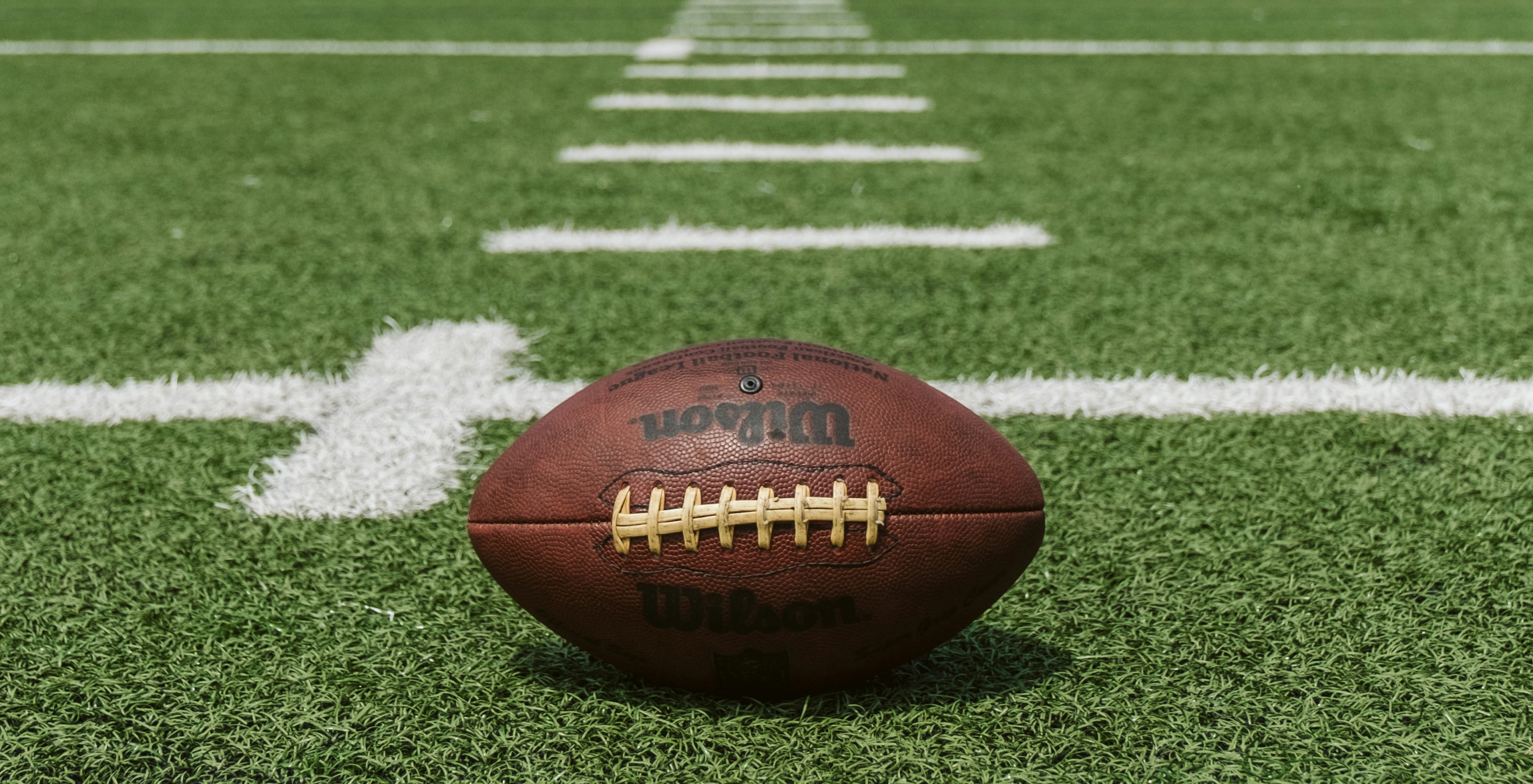
The hitch for advertisers is this. If you come to the game, you better come ready to play. And I don’t just mean financially. A hitch route looks easy on paper, but anyone who’s ever run one knows better. You sell the fade. You sprint full speed. You turn back at the very last second. By the time you do, the ball is already on its way. Miss the timing and it’s a drop. Or worse, a pick. It was always the hardest route for me to catch in high school, which is probably why my otherwise illustrious football career ended right around that same time…
Big Game advertising works the same way. The only thing worse than not being invited is fumbling on a national stage. It’s not enough to just pay your way these days. You’ve got to bring your best and brightest minds to the field. You have to show up with creativity, perfect timing, and the confidence to turn back and meet those opportunities or PR scares when they come at you fast.
From Cameos to Cinematic AdWorlds
Celebrity has always been part of the Big Game advertising. What’s changed is how intentionally it’s being deployed.
The era of simply dropping a famous face into a joke is fading. Recognition alone is no longer enough. Today’s strongest work treats celebrity as a creative building block, not a shortcut.
Audiences don’t just follow people. They follow tone. Style. Recognizable creative voice. Continuity. Increasingly, brands are borrowing from the language of film and television itself. Long-term partnerships. Distinct visual sensibilities. Recurring characters. Fully formed advertising worlds.
Some of the most compelling work aligns itself not just with celebrities, but with filmmakers. Directors like Yorgos Lanthimos bring a singular cinematic voice that audiences recognize immediately. When paired with ongoing collaborations, as seen with Emma Stone, the result feels less like advertising and more like a short film released into the cultural conversation. Personally, if the upcoming Squarespace ad is anything like Bugonia, you can bet I’ll be tuning in for the drop on February 8th.
Other brands lean into continuity through recurring talent. Uber Eats has built a self-aware, “meta” universe anchored by figures like Bradley Cooper and Matthew McConaughey. These are not one-off appearances. Each new installment builds on the last, rewarding viewers who have been paying attention. Let’s hope Bradley and Matthew can finally get to the bottom of this mega-corporation food-selling conspiracy at Big Game LX. Once we can all stop hearing Matthew yell “food” on repeat, I know we’ll all sleep better at night.
This is advertising behaving like entertainment. By design.
The Work Still Matters
Even in a night dominated by celebrity and spectacle, craft remains the differentiator.
Budweiser once again demonstrates its mastery of emotional storytelling. Borrowing from the visual language of Oscar-nominated filmmaker Chris Sanders, the brand delivers a spot that feels more like a scene from Wild Robot than a traditional beer commercial. I won’t lie, that baby eagle made me shed one, single, American tear.
It’s a good example that great work doesn’t necessarily need to lead with brand, doesn’t over-explain. It just trusts in the power of emotive story-telling. It stands oddly alone though. The 2026 lineup is crowded with humor and star power, so sincerity and drama might actually standout. Overall we’ve experienced a pretty stark shift in tone when you consider the Big Game XLIX days of “dad-vertising”.
Why the Big Game Endures
The Big Game doesn’t win by resisting change. It wins by absorbing it, hit after hit.
As media continues to splinter and attention scatters, relevance belongs to moments that can pull culture back into alignment, even briefly. In 2026, no moment does that more effectively.
The cost is high. The scrutiny is higher. But the value remains unmatched.
The Big Game is still the rare place where advertising can feel like an event. Where celebrities are used to build worlds, not just borrow attention. Where brands are invited into culture rather than forced through it.
Eight million dollars buys thirty seconds. But it takes great creativity to buy permanence.

David Estrada
Associate Creative Director
David is an Associate Creative Director with 14+ years of experience in journalism, filmmaking, content production, and advertising. Known for blending strategic insight with creative craft, he’s led award-winning campaigns and global productions that connect brands to culture in meaningful, memorable ways. A director, producer, and mentor, he approaches every challenge with grit, curiosity, and a passion for storytelling that earns attention and drives impact. Outside the agency world, David is a Grand Canyon paddler, cinephile, and skier.
By subscribing to our newsletter, you agree to our Privacy Policy.