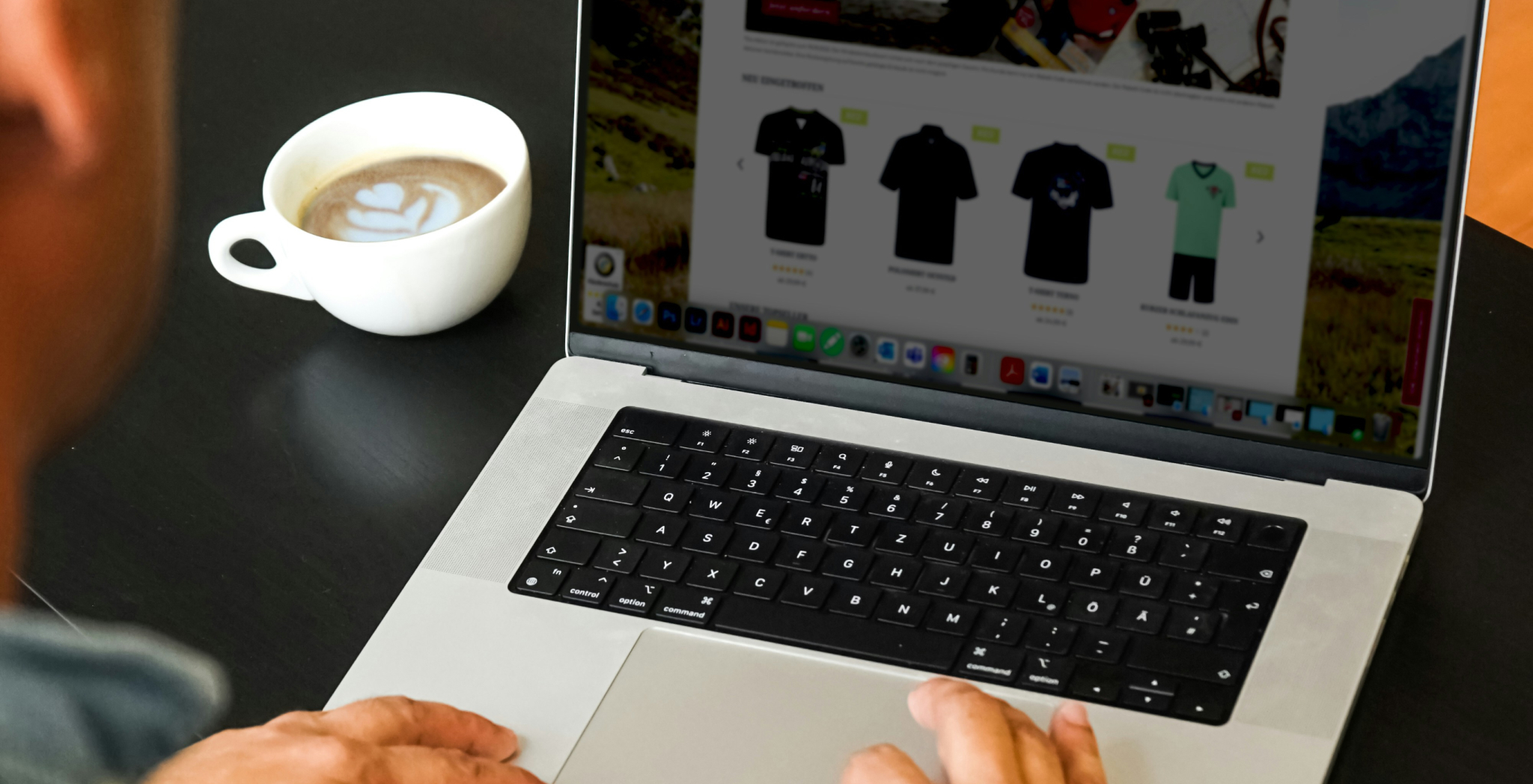
Have you ever received an email about an item you left in your online shopping cart? Or seen a banner ad for a product you just ran a Google search for? Or perhaps an ad featuring three items you just looked at on your favorite online boutique? Chances are you’ve experienced all three, which are each examples of programmatic advertising.
Programmatic advertising was the buzz phrase of the year for 2014. In fact, even Jimmy Kimmel described it as the “gluten” of the marketing world. But all the buzz didn’t make the term any less fuzzy for many marketers. In this article, we’re going to get to the bottom of what programmatic advertising is, how it works (and how it doesn’t work), and what we expect to see happen with this marketing tool this year.
What Is Programmatic Advertising?
At its core, programmatic advertising is the automation of online ad buys. So instead of buying ads through humans and insertion orders, you buy programmatic ads using software.
It’s not even a radical concept. Remember when you had to pick up the phone and call a travel agent in order to book a trip? You can still do that today, but most of us don’t. We buy airfare and book rooms directly from the airlines and hotels we want to use. This same fundamental shift toward process automation is taking place in the world of media buying today.
Now that we have the basics down, there are two distinct types of programmatic advertising.
First, there’s real-time bidding. As described by INMA.org, real-time bidding is when you’re “effectively buying inventory in a blind auction from the exchanges, not knowing where the ad [will] appear, but having confidence that the right people or, perhaps to be more precise, person, [will] see it.”
With programmatic direct, the second kind of programmatic advertising, the advertiser knows where the ad will appear and pays a set price – usually higher than RTB – for the space, but still makes the buy in an automated manner.
The Good, the Bad and the Ugly
So what’s the big deal about programmatic advertising? In theory, it’s faster, easier, less prone to human error and more cost-effective. How’s that? INMA.org explains it perfectly: “If your 50-year old Daily Telegraph reader also happens to be an avid Candy Crush player on the commute home, it’s just as easy and probably less costly to reach him via an ad between levels of Candy Crush than it is to reach him with a banner on the Telegraph’s mobile site.” And that’s exactly what programmatic advertising allows you to do.
Sounds great, right?
The flip side is a lack of control for the advertiser. Advertisers have no control over whether or not their ads will run alongside inappropriate content (like a different kind of Candy Crush) or on brand-harming websites. There are also concerns over lack of transparency in methods and results. Some advertisers also suggest that the poor quality of programmatic ad creative is hurting the overall effectiveness of programmatic ads.
The Future of Programmatic
So what’s on the horizon for programmatic advertising? We’re hoping for a year with less buzz and more results, but here are a few of our other predictions.
First, we expect to see a growth in programmatic advertising spend in 2015. Programmatic spend topped $8.3 billion in 2014, up from $6 billion the year before (source: Business Insider). And it’s expected to grow to 45 percent of the total digital display advertising spend this year.
Second, we’re expecting to see programmatic begin to move into the traditional space. Right now, programmatic advertising is primarily used for online banner ads, but there’s talk of it expanding to traditional media formats like out-of-home and TV.
Lastly, we believe media buyers will maintain relevance despite an increase in automated buying. Some have suggested the rise of programmatic advertising means the downfall of the media buyer or media buying agency as a whole. Although the process will be easier and more efficient, media buyers will still be needed to understand data and make recommendations on where to spend ad dollars, no matter how automated the process becomes. You may not need a banker to get $20 in cash anymore, but you definitely need one when it comes to major financial advice. For that same reason, media buyers need not fear the rise of programmatic ads.
Now that you’re practically an expert on programmatic advertising, are you ready to put it to practice?
By subscribing to our newsletter, you agree to our Privacy Policy.