Black Friday Cyber Monday marketing is not something brands should start planning in November.
By then, competitors have built audiences, tested creative, mapped promotions, prepared email and SMS, allocated media budgets and checked whether their ecommerce experience can handle the rush.
The stakes are significant. U.S. shoppers spent $44.2 billion online during Cyber Week in 2025, according to Adobe Analytics. Black Friday generated a record $11.8 billion, up 9.1% year over year, while Cyber Monday reached $14.25 billion.
So, what should brands do to prepare for Black Friday and Cyber Monday?
Start advertising plans months ahead, build the offer around business goals rather than the biggest possible discount, and treat BFCM as one connected campaign across media, creative, ecommerce, email, SMS and measurement.
When should brands start preparing for Black Friday Cyber Monday?
For most ecommerce brands, serious BFCM planning should begin three to four months before Black Friday. Brands with complicated inventory, large media investments or major creative campaigns may need longer.
That doesn’t mean customers should see Black Friday ads in August. It means the work behind those ads needs to start early.
Start with the business goal, not the discount
Before deciding whether to offer 20%, 30% or anything else, answer the harder questions.
How much revenue needs to come from BFCM? Which products need to move? How much inventory is available? How much margin can you sacrifice? Are you prioritizing new customers, existing customers or both?
This can lead somewhere more interesting than “25% off everything.”
A brand might use bundles to increase average order value, offer a gift with purchase to protect premium positioning or give loyal customers early access instead of a deeper discount.
The offer should serve the business strategy. Not the other way around.
Does winning Black Friday mean offering the biggest discount?
No. Klaviyo’s 2025 BFCM data found that spending among brands on its platform increased 11% year over year even as average discounts fell 10%. Repeat-buyer revenue also grew faster than new-buyer revenue.
That’s an important warning for brands preparing to slash prices.
A massive discount can generate an impressive revenue screenshot while quietly destroying margin. The better question is: What offer gives customers a reason to buy while still producing a valuable transaction for the business?
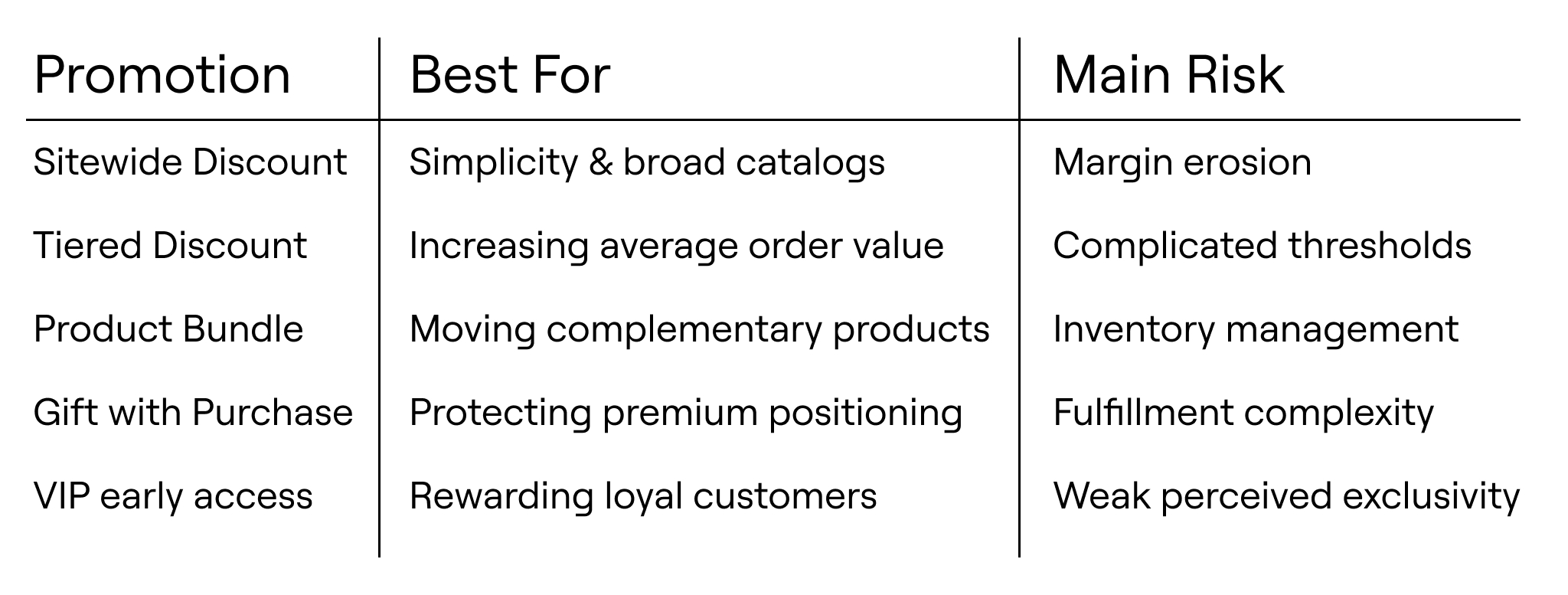
There is no universal best Black Friday offer. There is a best offer for your brand’s economics, audience and goals.
How should brands prepare paid media for BFCM?
Normal media conditions don’t necessarily apply during Cyber Week. Competition increases. Conversion behavior changes. Budgets climb. Demand can spike within hours.
Google’s tips for smart bidding recommend increasing campaign budgets during Black Friday and Cyber Monday and making planned target adjustments several days before major promotional periods. For short events where conversion rates are expected to change substantially, Google’s seasonality adjustments can help Smart Bidding prepare.
Build demand before you’re paying peak prices for it
Some of the most valuable BFCM media work happens before BFCM.
Use the weeks leading up to the event to introduce the brand, grow retargeting audiences, capture email and SMS subscribers and learn which products, messages and creative actually get attention.
Someone discovering your brand for the first time on Black Friday is different from someone who watched a product video two weeks earlier, visited twice and signed up for early access.
It’s also crucial to look beyond platform ROAS. Customer acquisition cost, margin, new versus returning customer revenue and longer-term customer value can tell a very different story about whether a campaign actually worked.
How important are email and SMS during Black Friday Cyber Monday?
Extremely. Klaviyo reported that email and text generated 42% of BFCM revenue among brands on its platform in 2025, reaching roughly 43% on peak days. Email revenue grew 15% year over year, while text revenue increased 25%.
But sending more messages isn’t automatically better marketing.
Don’t send every customer the same thing
A loyal customer with five previous purchases should not necessarily receive the same communication as someone who subscribed yesterday.
Segmenting VIPs, recent purchasers, lapsed customers, high-value customers and engaged non-buyers allows brands to change the offer, timing and message based on the relationship.
This is where a strong email marketing strategy becomes more complicated than scheduling five promotional blasts.
Automated journeys also need attention. Cart abandonment, browse abandonment, back-in-stock and post-purchase flows should be reviewed before BFCM so customers aren’t receiving outdated offers or conflicting messages during the biggest promotional period of the year.
Is your ecommerce site actually ready for Black Friday traffic?
Great Black Friday advertising can still send customers into a terrible buying experience.
Mobile deserves particular attention. Salesforce’s Cyber Week dataset found smartphones accounted for 70% of U.S. online orders.
Test the complete path to purchase
Don’t just look at the homepage and call it done.
Follow the customer from an Instagram ad to a landing page. Click a promotional email on your phone. Enter through a Google Shopping listing. Add products to the cart. Apply the promotion. Complete checkout.
Check page speed, links, promotional codes, inventory messaging, shipping information, payment options, pixels and analytics events.
BFCM has a habit of exposing tiny technical problems when they’re suddenly attached to a very large media budget.
What creative works best during Black Friday Cyber Monday?
Successful BFCM creative can accomplish two immediate jobs: get attention and make the offer easy to understand. Brands sometimes work so hard to create a clever Black Friday campaign that customers can’t tell what’s actually on sale.
Build a creative system instead of one hero ad
One piece of creative will rarely carry the entire promotional period.
Brands may need campaign-level assets, product-specific ads, short-form video, promotional graphics, retargeting creative, email assets, landing-page content and last-chance messaging.
Those assets then need variations for audiences, formats, products and stages of the weekend.
That’s why BFCM creative isn’t simply a design assignment. It’s a coordinated testing and production operation, especially when a cross-channel marketing strategy is involved.
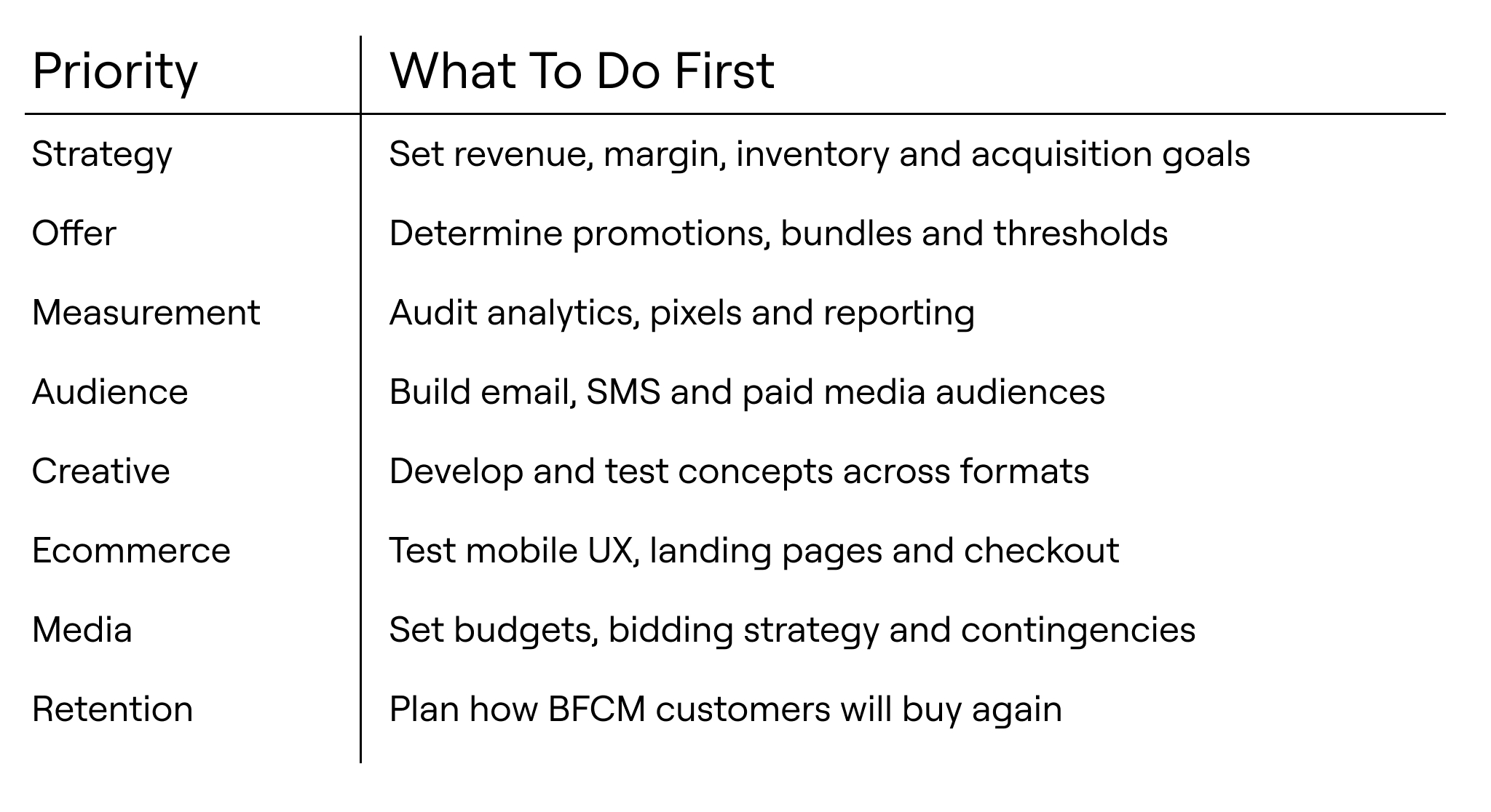
What should brands prioritize first for Black Friday Cyber Monday?
When the BFCM task list starts getting uncomfortable, prioritize it in this order:
Black Friday Cyber Monday marketing: The key takeaways
- Start three to four months ahead.
- Set the business goals before determining the offer.
- Build audiences before competition peaks.
- Test creative early.
- Segment email and SMS.
- Treat mobile as the primary ecommerce experience.
- Audit measurement before traffic surges.
- Measure success on profitable customer growth, not revenue alone.
None of those tasks is particularly intimidating on its own.
The hard part is getting all of them to work together at exactly the right time.
Ready for BFCM? Make sure your marketing is.
Black Friday Cyber Monday rewards brands that prepare and punishes the ones trying to assemble the strategy while the sale is already running.
If BFCM is one of your biggest revenue opportunities of the year, give it a strategy built to match. Contact us about building a Black Friday Cyber Monday campaign that turns peak-season attention into real growth.
By subscribing to our newsletter, you agree to our Privacy Policy.