If you’re planning a CPG media budget, the answer isn’t to spend more. It’s to spend smarter.
Consumer packaged goods brands have more advertising options than ever before. Retail media networks continue to grow, Connected TV has become a staple in media plans, paid social keeps evolving, and search remains one of the most reliable ways to capture demand. The challenge is deciding how much each channel deserves.
Too often, brands chase the newest platform or shift more dollars into whatever offers the clearest attribution. That approach may improve reporting, but it doesn’t always improve business results.
The strongest CPG marketers understand that every channel has a different purpose. Some create awareness while others influence consideration. A few are designed to convert shoppers who are already ready to buy. The brands that outperform their competition aren’t treating every media dollar the same. They’re building balanced strategies that create demand before consumers ever walk into a store or open a grocery app.
Why CPG Media Planning Is More Complicated Than Ever
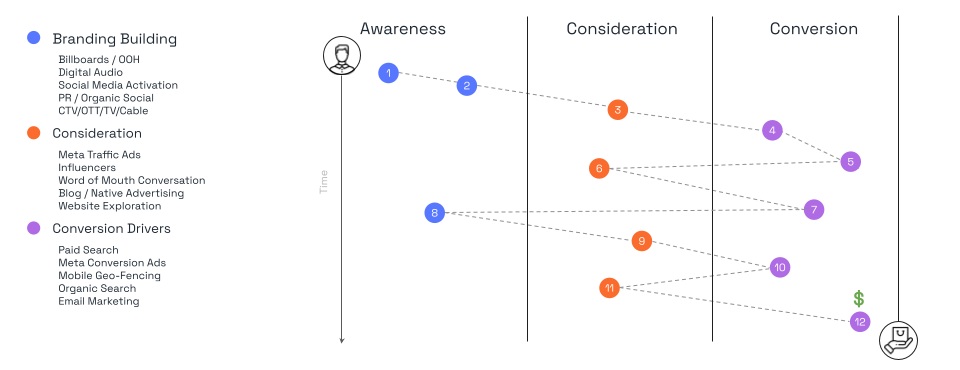
The traditional marketing funnel hasn’t disappeared, but consumer behavior has made it far less predictable.
A shopper might discover your brand while streaming television, scroll past one of your videos on Instagram later that evening, search for recipes on Google over the weekend, and finally purchase your product through Instacart several days later. Every one of those touchpoints influenced the final sale, yet no single platform can claim full credit.
This fragmented journey is forcing marketers to rethink how they allocate their budgets. Instead of asking which channel performs best, brands should ask how each channel supports the next. Awareness creates interest. Consideration builds confidence. Conversion channels make purchasing easy. When one piece is missing, the rest of the strategy becomes less effective.
That shift is one of the biggest reasons media planning has become significantly more complex over the past few years.
How CPG Brands Should Allocate Their Media Budget
There isn’t a universal formula for developing a media plan and budget that works for every brand, but industry benchmarks provide a useful starting point.
According to NBCUniversal’s latest CPG research, paid social continues to receive the largest share of advertising budgets, followed by linear television, Connected TV, online video, retail media, display advertising, and paid search. The report also notes that retail media spending continues to increase year over year as brands invest more heavily in retailer advertising platforms.
Those trends make sense. Digital media offers precise targeting, measurable performance, and flexibility that traditional channels cannot always match. However, benchmarks should be viewed as guidance rather than rules.
Many brands have become too reliant on retail media because it provides straightforward attribution. While retailer networks are an important part of the media mix, they should complement brand-building efforts rather than replace them.
Has Retail Media Become Too Important?
Retail media has earned its place in almost every CPG media strategy.
Platforms like Walmart Connect, Kroger Precision Marketing, Amazon Ads, and Instacart provide access to valuable first-party shopper data. They allow brands to reach consumers who are actively shopping and measure purchases with impressive accuracy. For lower-funnel campaigns, they can be incredibly effective.
The problem begins when brands expect retail media to generate new demand.
Most retailer networks are designed to influence shoppers who are already in your ecosystem. They are much less effective at introducing your brand to households that haven’t started shopping yet. If too much of the budget shifts toward retail media, brands risk focusing only on existing demand while neglecting future growth.
Why Connected TV Is Becoming Such a Valuable Investment
Connected TV continues to gain momentum because it combines the storytelling power of traditional television with the targeting capabilities of digital advertising.
Unlike broad national television campaigns, premium Connected TV allows brands to reach highly specific audiences while maintaining a premium viewing experience. Consumers are paying attention, the creative has room to tell a story, and advertisers can target households based on demographics, interests, and shopping behaviors.
Premium non-retail CTV buys can often deliver greater efficiency than comparable retail media placements. Lower CPMs, added value impressions, and access to premium programming can significantly increase household reach without requiring a larger budget.
That additional reach creates more opportunities to introduce brands to consumers before they begin shopping, making premium Connected TV one of the strongest awareness investments available today.
Paid Social Is Doing More Than You Think
Few channels influence the customer journey as consistently as paid social.
Consumers discover products while scrolling, watch recipe videos, save meal ideas, and share recommendations with friends. Those behaviors make platforms like Meta and TikTok valuable throughout the buying journey rather than at just one stage.
Unfortunately, many brands still treat social media as a direct-response channel. They optimize for clicks and conversions while overlooking its ability to build awareness and consideration.
A stronger strategy combines video campaigns, creator partnerships, educational content, and conversion-focused advertising into one coordinated effort. Instead of asking every campaign to generate immediate sales, marketers should recognize that social media often prepares consumers for purchases that happen days or even weeks later.
That broader role is one reason paid social continues to represent the largest share of many CPG media budgets.
Don’t Overlook Paid Search
It absolutely does, but it plays a different role than television or social media.
Search captures demand that already exists. Someone searching for mashed potato recipes, side dish ideas, or a specific product has already moved much further down the buying journey than someone seeing your brand for the first time on Connected TV.
That makes search marketing one of the most efficient channels for protecting brand visibility and capturing high-intent shoppers. It should support broader awareness efforts rather than replace them.
Without consistent investment in upper-funnel media, search eventually reaches a ceiling because there are fewer consumers actively looking for your products.
What Should Brands Measure Instead of Platform Metrics?
One of the biggest mistakes marketers make is confusing media activity with marketing success.
A low cost per click or high click-through rate may indicate an efficient campaign, but neither guarantees business growth. Strong media strategies should ultimately be measured by their impact on sales.
Today’s leading CPG brands are looking beyond clicks and impressions to measure real business impact. Metrics like incremental sales, sales lift, buy rate, return on ad spend, and household penetration provide a much clearer picture of marketing performance. When combined with third-party measurement partners such as Circana and ABCS, advertisers can better understand how campaigns influence purchasing behavior across multiple retailers.
When measurement reflects business outcomes instead of platform performance, brands make better investment decisions.
The Future of CPG Marketing Belongs to Integrated Media Planning
The biggest lesson for 2026 is that media channels should not compete with one another. They should work together.
Retail media converts demand. Premium Connected TV creates awareness. Paid social keeps brands relevant throughout the customer journey. Search captures purchase intent. Display, online video, and programmatic advertising reinforce the message along the way.
No single platform can deliver sustainable growth on its own.
The brands that outperform their competitors are the ones building connected media ecosystems instead of isolated campaigns. They understand that consumers don’t think in channels, so their marketing shouldn’t either.
Ready to Build a Smarter Media Strategy?
Creating an effective CPG media plan and budget has never been more challenging. New platforms emerge every year, retailer networks continue to evolve, and consumer behavior changes faster than most annual media marketing plans can keep up.
At Brandon, we combine proprietary media research, audience insights, retailer data, and cross-channel planning to help CPG brands make smarter investment decisions. If you’re evaluating your 2026 media budget and want a strategy built around long-term growth instead of short-term metrics, we’d love to start the conversation.
By subscribing to our newsletter, you agree to our Privacy Policy.